
Why SEO is Not Dead: Adapting to AI Search
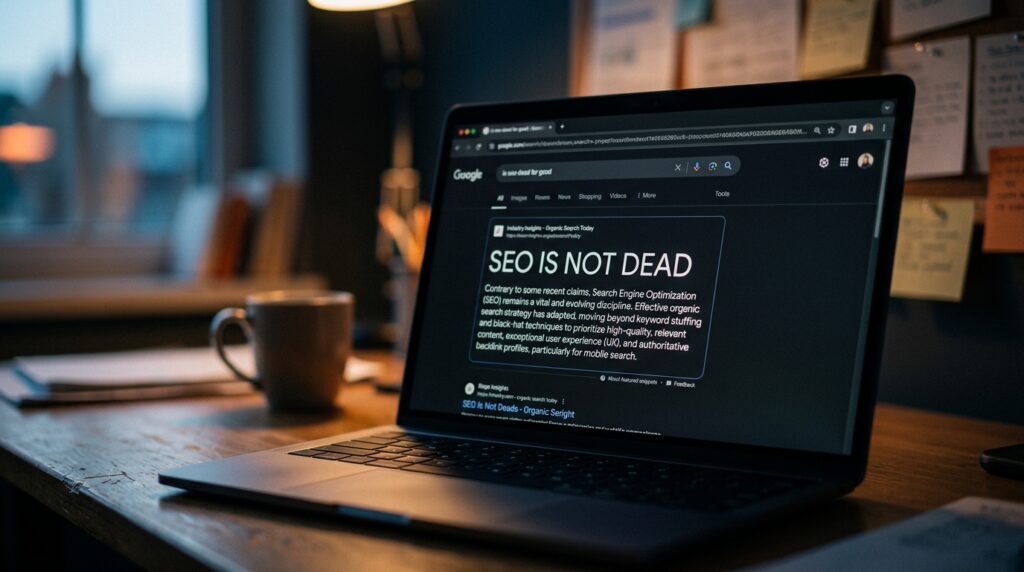
Every year, self-proclaimed gurus claim that the industry is collapsing, yet Google still sends 89% of all web traffic to websites. The reality is that SEO is Not Dead, it is simply evolving alongside generative AI search features.

Key Takeaways
| Key Point | Why It Matters |
|---|---|
| Google’s Official Guidance | Google explicitly states that traditional optimisation principles remain relevant for generative AI search. |
| Synergy Between Search and AI | Ranking well in standard results is a prerequisite for appearing in AI Overviews. |
| Schema Markup is Essential | Structured data helps AI models understand and categorise your content accurately. |
| E-E-A-T Still Applies | Experience, Expertise, Authoritativeness, and Trustworthiness are vital trust signals for AI. |
| Content Formatting | Writing in clear, logical structures helps AI parse and surface your information. |
The Reality of SEO in the Era of AI Overviews
Google’s AI Overviews are changing how users interact with search results and websites. However, this shift does not mean organic optimisation is obsolete.
Instead, it requires a shift towards Answer Engine Optimisation (AEO). This approach focuses on providing direct, clear answers that AI models can easily extract and present.
Many content creators find themselves drawn to this particular shift because it rewards high-quality, SEO-optimised content. The focus is now on genuine knowledge rather than keyword stuffing.
Detailed case studies, client stories, or hands-on advice signal genuine knowledge. These elements are exactly what AI algorithms look for when generating responses.
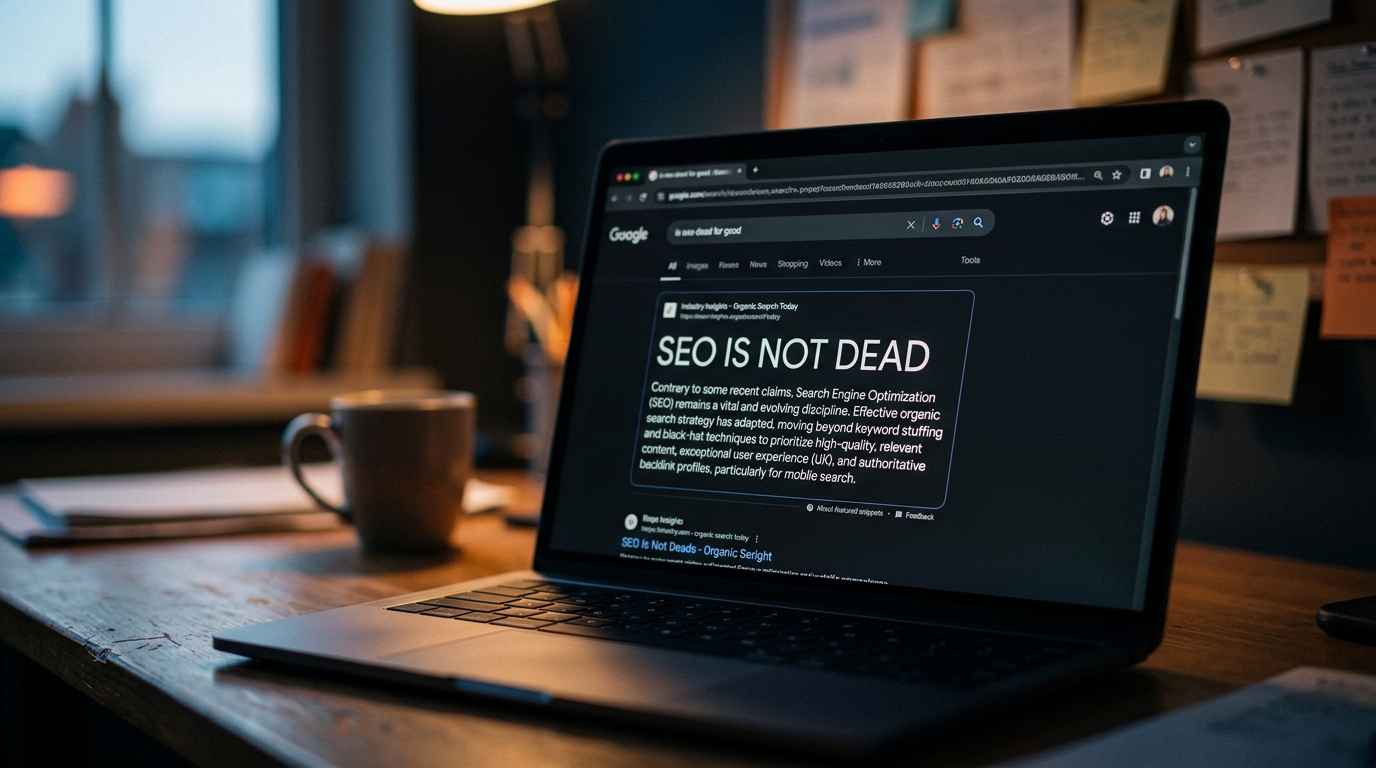
Why SEO is Not Dead According to Google’s Own Guidance
Google provides explicit documentation on how to prepare for AI-driven search. Their official AI optimisation guide confirms that foundational principles remain critical.
This guide aligns with the core search essentials that Google has promoted for years. It proves that the fundamentals of visibility have not been abandoned.
In a recent article, Brendon Kraham, VP of Search & Commerce Global Ads Solutions, confirmed that AI Search still relies on the same core ranking systems as traditional Search. (source)
I myself have found that following this guidance, including the recommended elements, writing content in the correct format and adding schema mark up have brought good rankings in both Google search and AI results. This hands-on experience directly contradicts the claim that SEO is dead.

Key Elements for Answer Engine Optimisation (AEO)
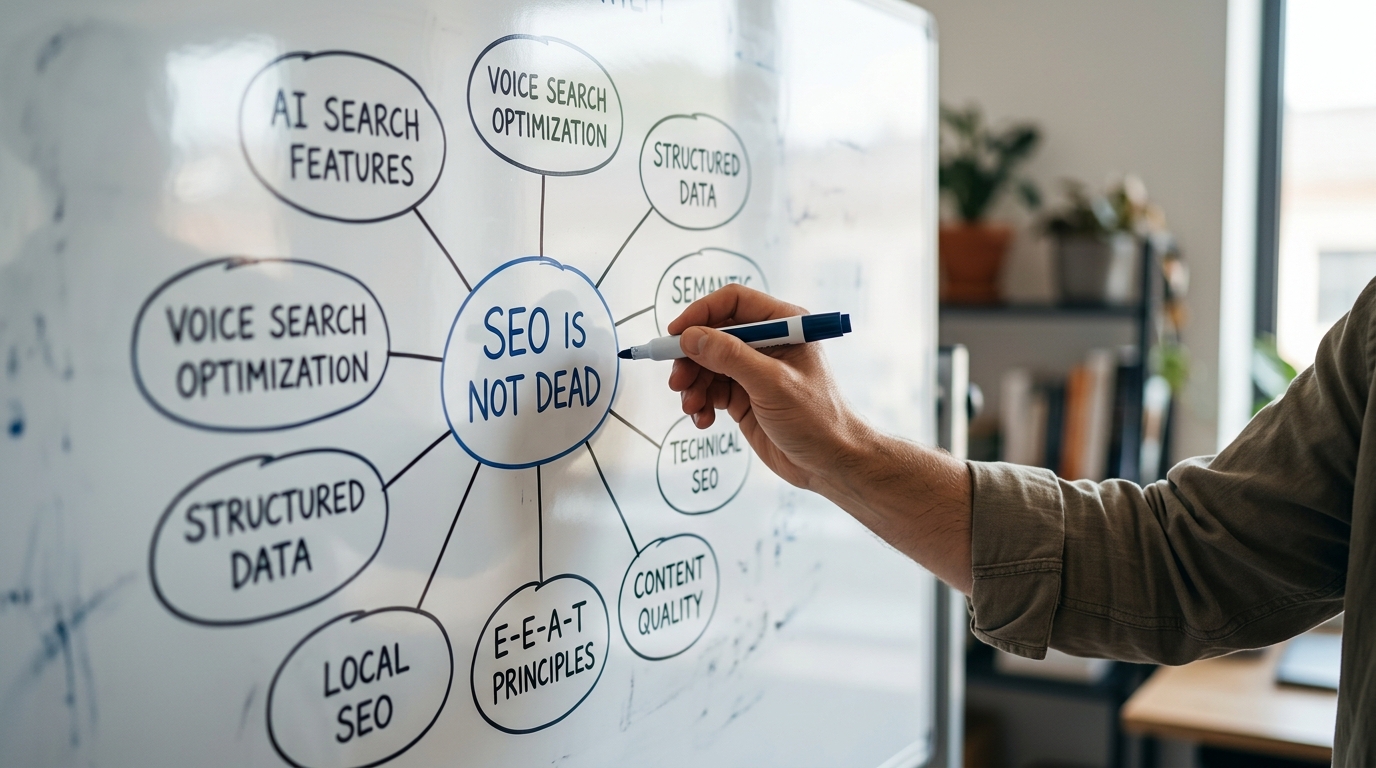
Transitioning to AEO requires specific technical and content adjustments. We recommend focusing on structured data and clear formatting.
Adding schema markup is one of the most effective ways to communicate with AI. It categorises your content, making it easy for algorithms to understand its context.
Writing in the correct format involves using logical headings and bullet points. This structure allows AI models to parse your content efficiently and extract relevant answers.
For niche sites and small businesses, these technical adjustments level the playing field. They provide the trust signals needed to compete with larger domains.
How We Know SEO is Not Dead in Practice
Our Answer Engine Optimisation strategies consistently yield positive results for our clients. We see traffic growth when sites align with AI requirements.
Part of this success comes from understanding how to prevent AI Overviews from killing website traffic. The key is providing value that AI summaries cannot fully replicate.
Original images, videos, and data visualisations also help convey expertise that generic AI cannot easily replicate. These multimedia elements enhance the user experience.
Writers benefit from automatic inclusion of recent developments without needing to conduct extensive research themselves. However, the authentic human voice must remain central to the content.

Building Trust Signals for Generative AI
Google evaluates content based on its helpfulness and quality rather than simply penalising it for being AI-generated. We explore this further in our analysis of Google’s stance on AI produced content.
To build E-E-A-T (Experience, Expertise, Authoritativeness, and Trustworthiness), you must demonstrate real-world knowledge. This is particularly true for brand stories and case studies.
Citing awards, certifications, or partnerships can further enhance credibility in the eyes of Google and visitors. These elements act as concrete trust signals.
Unlike more basic AI writers, maintaining a consistent brand voice throughout copywriting projects is essential. This proves particularly valuable for testimonial-based content where authentic voice matters.
The Technical Trade-offs: What Works and What Doesn’t
When adapting to AI search, technical performance is just as important as content. Many site owners consider converting their platforms to improve speed.
We often provide specific technical guidance on converting bloated WordPress sites into high-performance HTML. This static site advocacy dramatically improves load times and crawlability.
However, it is important to acknowledge the technical trade-offs. Features like user logins, comments, search, dashboards, or e-commerce won’t work unless rebuilt with external services.
Understanding how to optimise for semantic search is also crucial. Semantic search focuses on understanding the actual meaning behind words and phrases, instead of relying only on exact matches.
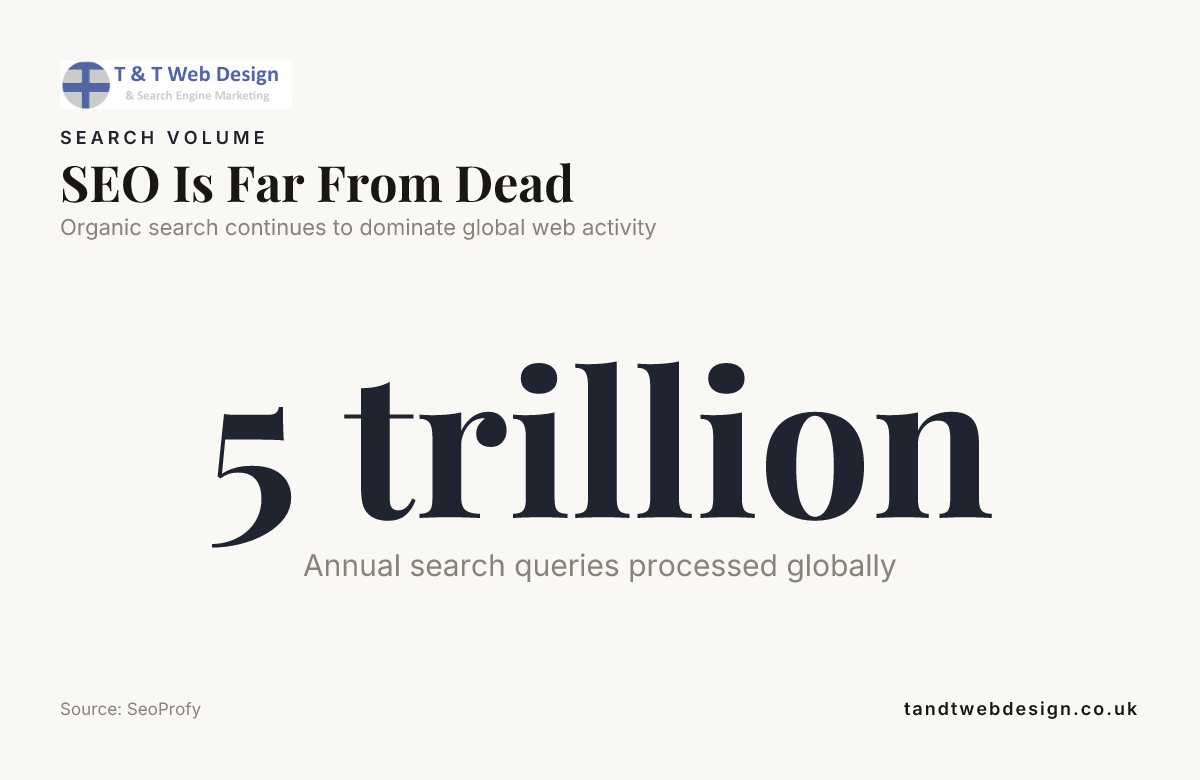 Organic search continues to dominate global web activity
Affordable Options for AI-Ready Websites
Adapting to these changes does not have to be expensive. There are cheap SEO packages available that cover the essentials.
Our standard SEO service endeavours to assist you with all the aspects of search engine optimisation for your website. This includes technical issues and backlink building.
For businesses needing more depth, we offer enhanced packages. Our SEO+ package combines standard optimisation with long-form content creation.
Taking a DIY SEO approach also has its own set of advantages for those on a strict budget. It allows for complete control over your trust signals.

Adapt For The Future
The claim that SEO is Not Dead is supported by Google’s own documentation and our real-world testing. Following the official AI optimisation guide yields tangible results in both traditional and generative search.
By focusing on E-E-A-T, schema markup, and authentic content creation, businesses can secure their visibility. The future belongs to those who adapt their strategies to work alongside AI, not against it.
Frequently Asked Questions
Is SEO dead?
No, SEO is Not Dead. Google’s official guidance confirms that traditional optimisation principles, including schema markup and E-E-A-T, remain essential for visibility in generative AI results.
Will AI Overviews kill website traffic?
AI Overviews change user interaction, but they do not necessarily kill traffic. By providing original data, multimedia, and deep expertise, websites can still attract highly relevant clicks from AI users.
How do I optimise my website for AI search?
You should follow Google’s AI optimisation guide, which recommends using schema markup, writing in clear formats, and building strong trust signals. These elements help AI models understand and cite your content.
Does Google rank AI-generated content?
Yes, Google ranks AI-generated content if it provides value and helpfulness to users. Google evaluates content based on quality rather than penalising it simply for being created with AI tools.
What is Answer Engine Optimisation (AEO)?
Answer Engine Optimisation (AEO) is the process of structuring content to provide direct, clear answers that AI models can extract. It relies heavily on semantic search principles, schema markup, and logical formatting.
Do I need to rewrite all my content for AI search?
You do not need to rewrite all your content, but you should update it to ensure it aligns with E-E-A-T principles. Adding schema markup and ensuring clear, structured headings will significantly improve your AI visibility.


